|
| | | |
Capacity Building for Democratic Local Governance
Principles and General Procedures:
|
Some basic principles of capacity building:
Capacity building is a comprehensive instrument and a long-term
process. A variety of inter-connected instruments and interventions
need to be undertaken, including:
- Training within functional groups
based on principles of adult and experimental learning, designed to
assist target groups to acquire the requisite knowledge, skills and
attitudes for change.
- Coaching and process-oriented advisory services
used to assist individual stakeholders to improve their performance and
efficiency in excising their day-to-day responsibilities. It is also
used to strengthen the self-learning capacities particularly with
regard to acquiring and applying problem-solving skills within a
changing governance framework.
- Inter-organisational forums
designed to bring together stakeholders from different institutions.
The forums provide an opportunity to share experiences on issues such
as roles and responsibilities, modes of partnerships, or even to
mediate when difference of interests occurs.
- Organisational development support
designed to assist members and staff of non-governmental organisations,
networks and local government associations during the elaboration of
effective internal structures and processes. This support is also
intended for the development of a vision, setting concrete and
realistic objectives with corresponding strategies.Knowledge Management
ensures that “good practices” and “lessons learnt” are systematically
documented and disseminated during meetings or networks and
consultations.
- Provision of financing facilities
for NGOs, networks and/or associations; firstly as a form of “start-up
assistance” for the implementation of specific/innovative local
governance activities and secondly, as a learning process for the
application of good governance standards.
Capacity building needs to be augmented through other developmental
instruments. For individual local councils, the bargaining power is
often limited. Forming groups or associations significantly increases
the bargaining power. A methodological approach how such unions or
associations can be created has been described in the methods
BOLD“Strengthening local Governance through Community Unions”UNBOLD. A
further instrument that has proved very effective is the use of
development and social funds. The method BOLD“Development and Social
Funds”UNBOLD describes the value of these funds and also provides
examples of operational manuals. Potential conflict mitigation has also
proved effective as an instrument. Here the method “do-no-harm” and
“Peace and Conflict Impact Assessment - PCIA” are proven instruments
that help further support the capacity for good local self-governance.
All of these related methods can be found at www.methodfinder.net.
|
|
Stakeholders targeted by capacity building and the focus of the interventions:
- Citizens and their organisations;
better articulate their interests and concerns, guide them to relevant
public and private service providers, as well as develop and apply the
necessary checks and balances towards their elected representatives and
improve upon the planning and implementation of community activities
and projects.
- Local self-governments;
improve upon participation, transparency, accountability,
poverty-orientation and gender equity in the performance of their
functions and better position them within the system of decentralised
governance and development management.
- Provincial and district authorities;
enhance their support and supervisory functions towards the local
self-government structures, improve upon the co-ordination of
development efforts and facilitate effective communication channels to
the higher levels of government.
- Representatives of provincial line agencies;
improve upon their responsiveness to citizens, develop performance as
service providers to local self-government bodies and co-ordinate their
activities at the local and intermediate levels.
- NGOs; better
perform as multipliers/service providers on local governance related
issues, represent concerns of their clients to provincial and national
level stakeholders and engage in partnership activities with
governmental organisations.
- National and local capacity building organisations,incl.
staff members of NGOs, universities, private sector consultancy
organisations; perform as professional facilitators within the
framework of local governance processes.
In order to provide an input into the national level policy debate and
to promote the institutionalisation of proven approaches, feed-back on
programmes experiences is given to national level government agencies,
working groups and technical committees.
Systematic capacity building process:
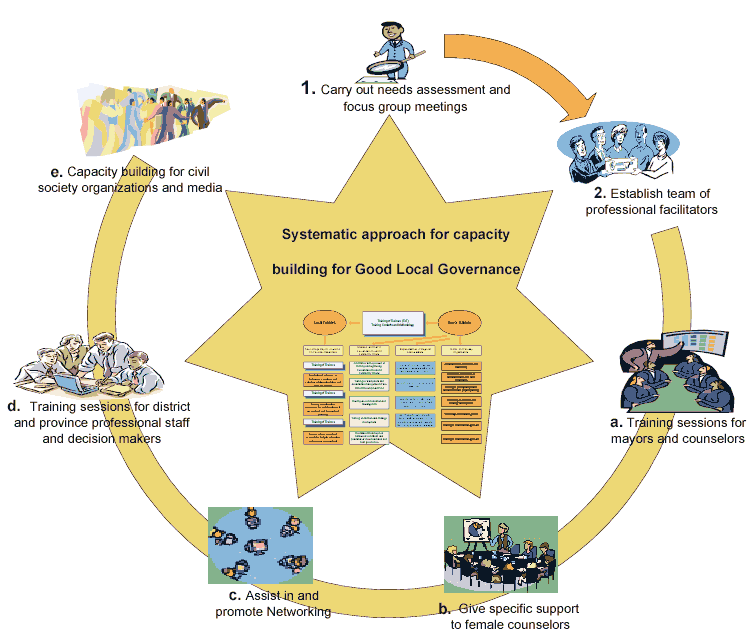
Practice has shown that a systematic approach for training and capacity
building is important. First and foremost an analysis has to be
followed by the establishment of the necessary training capacity (steps
1 and 2). Thereafter, the facilitators provide training or capacity
building services for the various different groups or stakeholders
(stakeholders a-e). While steps 1-2 follow each other the training and
capacity building services for the stakeholders should be viewed as a
modular process. It is not necessary to train or capacitate all
stakeholders this will be dependent upon the local context. The process
can be undertaken in parallel or step-by-step.
1. Undertake a contextual analysis and needs assessment.
2. Establish and capacitate a team of professional facilitators, and
undertake / provide training and capacity building services for:
a. Local self-government stakeholders.
b. Female councillors/elected representatives.
c. Networks or local government associations.
d. Stakeholders at the intermediateprovincial and district levels.
e. Civil society representatives.
|
|
Figure 1: Systematic process for´capacity building
(click inside to enlarge)

Step 1: Contextual needs assessment:
Without knowing exactly what is needed as far as capacity building is
concerned, a programme to improve the capacity is unlikely to be
properly targeted and focused. This method refers to capacity building
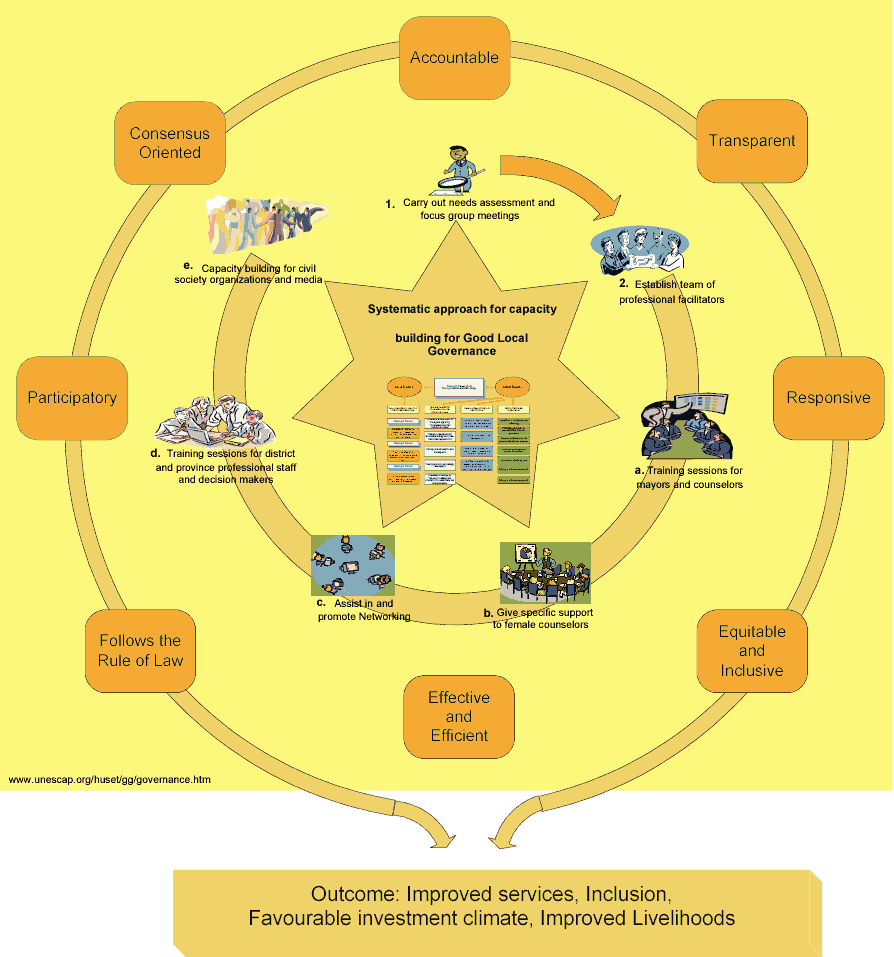
for good local governance. The elements that make up good local
governance are illustrated in figure 2.
Essentially, capacity building presents the difference between existing
knowledge and the required / desired knowledge and capacity. This
presumes that a strategy or vision of what exactly is expected for
improved democratic local self-governance should be available. The
strategy provides the framework in which capacity building has to be
undertaken and presents and therefore defines the know-how and capacity
needs.
The capacity needs assessment should be context specific and should
address local, social, cultural, economic and other relevant factors.
This assessment should include:
- An analysis of the legal and institutional framework conditions for democratic and good local governance;
- Assessment of the roles, responsibilities and concrete tasks of organisations and the people working therein;
- Assessment of the required processes and mechanisms within
and among organisations and stakeholders to achieve anticipated results;
- The identification of required knowledge, skills and attitudes of people in order to perform well;
- Assessment of what is available, correspondingly of what is
missing in reality, i.e. the identification of change requirements with
regard to personal and organisational capacities, internal
organisational processes and external system-wide mechanisms and
processes.
- The identification and agreement with the target groups on
specific capacity building interventions and objectives to be achieved.
Figure 2: How capacity building is expected to contribute to good local governance
(click inside to enlarge)

Step 2: Establishing team of professional facilitators:
Establishing a team of professional facilitators possessing sufficient
knowledge, skills and confidence to handle the challenges in promoting
democratic and good local governance based on participatory and adult
learning approaches forms the second step in the process. The formation
of groups of professional facilitators at the local level is one way of
ensuring that professional training and advisory services can continue
to be offered once the development programme has ended. Such a corps of
local trainers is all the more important in rural areas where
professional expertise is rare. While training either professionals or
trainers (through training of trainer courses), emphasis needs to be
placed on building their capacities for process moderation within the
context of the political reform processes. Reflection teams or small
work-groups are established to exchange experience, discuss issues and
monitor the progress made on assignments given by the trainers.
The conceptual approach of the courses required for establishing a team of professional facilitators centres on:
- Transmission of knowledge on decentralisation and local
governance related issues with particular reference to the country
specific conditions.
- Transmission of skills on how to effectively handle the
role of facilitators in the cultural setting of the respective
countries.
- Practising their new skills in specialised capacity
building programmes. Peer group work to complete set tasks, to reflect
on their own actions and
- to start develop their own concepts.
- Coaching and supervising trainees between formal training sessions.
Content wise the courses focus on:
- Local governance and decentralisation concepts and
strategies, including experiences made to date in the respective
country. International good practices.
- Skills to encourage learning processes within the cultural
setting including: facilitation tools, use of case studies, role plays,
brain-storming.
- Skills to facilitate training on core aspects of local
governance and decentralisation processes, including: project planning
and implementation, financial management, cross-cutting issues of good
governance. Training for local government and civil society
organisations.
- Skills for local governance and decentralisation related
processes including: public hearings, round-table forums,
self-organisation and selflearning aspects.
- Problem-solving and conflict resolution skills.
- Strategies on how to act as multipliers within their own organizations
- and/or to market their services to a broader audience.
Success of the programme depends on the commitment of trainees to
eventually perform as facilitators. Participants benefit personally
from the training and, given the significant costs involved in
providing the training, it is legitimate to require the participants to
make personal commitments towards sharing the costs involved, this can
be in cash or kind.
Undertake training and capacity building for......
a. Local self-government:
Implementing decentralised responsibilities is a challenging task for
local elected representatives given that there is often not much
experience in democratic local governance to build on. This requires
capacity building of local self-government stakeholders such as
council/assembly members, town/village mayors. Levels of education and
training are often low leaving many professionals unable to effectively
and efficiently perform stipulated roles and functions within any newly
decentralised system. They may be further constrained by unfavourable
conditions, which may include the slow speed or frequent delays
incurred while implementing the decentralisation process, or due to a
weak power and financial base of local selfgovernments, which may in
turn be aggravated a relatively unorganised civil society.
The main emphasis of the basic training provided to local
self-government stakeholders is placed on qualifying them to perform
defined roles and functions in an efficient and effective manner, to
make administration more accessible to citizens and particularly to
improve public participation in the planning and delivery of services.
Civil society representatives are invited to join these sessions in an
effort to promote co-operation from the start and to ensure that the
know-how is also anchored within the communities.
Main focus of the basic training focuses on:
- The legal framework conditions and potentials of decentralisation and local governance in the respective country;
- Effective skills for development planning, implementation, monitoring and evaluation;
- Budgeting and financial management.
A major focus is placed on cross-cutting aspects of how to strengthen
local democracy and to improve citizen’s participation in local
self-government activities and how to promote transparency and
accountability in public office and development management. An example
includes support to the establishment of “public hearings” as an
opportunity for local selfgovernments and citizens to discuss issues of
local concern and to mediate possible differences of interest.
Building on the impact of this initial basic training a series of
further courses provides for skills building in participatory project
maintenance, bidding and procurement, the establishment of citizen’s
service office, the establishment of management information systems and
internal administrative procedures.
b. Women councillors / elected representatives:
Specific interventions for women councillors/elected representatives are
important in order to strengthen the role of women in politics and
public office. Equal representation advances the process of
democratisation, realisation of human rights and broad based
participation. Equal opportunities for women and men in accessing and
controlling resources can have a positive impact on economic growth and
poverty reduction.
Often representation and participation of women in the decentralisation
process appears to be marginal in many countries due to exclusion of
women from mainstream (party) politics, societal patterns of male /
women roles in society, the difficulty of combining traditional roles
with official commitments, lower levels of education etc. Low
representation of women in community or village councils means that
council decisions are malebiased. Women face additional constraints:
their marginal position, lack of experience appearing in public, open
and subtle forms of discrimination by male councillors make it hard for
the women to exert a meaningful influence on council policy and
decisions.

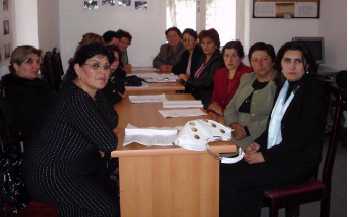
Photo 3: Challenge of getting women interested in local governance at a network meeting interested in local governance
Specific capacity building interventions for women members of local
selfgovernment bodies are not designed to substitute gender
mainstreaming activities. Instead they are to complement these efforts
and are designed to address the specific challenges women councillors
face. Improving the skills of women will facilitate to increase their
political visibility, make an impact on council decisions and also
enable them to share their experiences through networks, informal
groups and associations. Additional support should be provided through
discussion forums or interviews that could be broadcasted on radio or
TV. The objective would be to demonstrate that women can act as
competent town or village councillors and they would also provide
examples of how women can actively participate in both public and
political life. Positive experiences have been made with support to the
establishment of Women Councillor Forums, held on a bi-monthly or
quarterly basis, which provide an opportunity for:
- Forming a network for experience sharing, providing mutual support and strengthening co-operation among the women councillors;
- Developing strategies and acquiring skills to improve their
performance and to make them more visible during council proceedings;
- Developing strategies and skills to liaise with their electorate and civil society organisations;
- Developing skills on how to present themselves more effectively in public;
- Strengthening their self-confidence and leadership skills.
The forums provided for the women councillors builds a strong
self-help/ self-learning approach. Women are expected to develop their
own strategies to deal with the day-to-day problems arising from their
performance as women in public office. Supplementary training on
communication, negotiation and leadership skills and/or
decentralisation and local governance issues also should be provided.

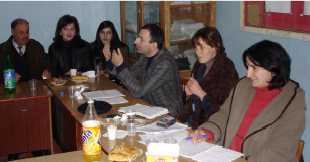
Photo 4: Challenge of getting women interested in local governance

Photo 5: ....once interested then how to effectively interact in a male dominated council.....?
c. Networks / associations of local self-governance:
Increasing the level of confidence of local self-government to handle
their new roles and responsibilities or increasing their bargaining
power towards other (government) stakeholders cannot be achieved by
training alone. This requires assistance to local government
stakeholders to form networks/local government associations is a
logical development of the capacity building process. An alternative
approach to training that has proved successful in a number of
countries is the formation of networks or associations. The networks
and associations can take the form of informal platforms or formal
local government bodies. Generally, the associations are established at
the district or provincial level. Objective of the associations is to
increase the representation of local self-governments in higher level
political and developmental decision making processes as well as to
increase their bargaining power. The impact has been that more external
resources could be accessed by the associations and used directly by
the local-self governments.
Practical considerations necessitate that only a limited number of
participants are included in the training in order to ensure that an
effective learning environment is created. Participants have to be
representative for the different sections of the council, with special
attention being accorded to female councillors. Formation of a
development fund (compare Development and Social funds in
www.methodfinder.net) has proved to be an important instrument for
promoting and sustaining associations, networks and forums of
local-self-governments. The development fund provides the necessary
financial means for implementing development projects that have been
prioritised by the local self-governments. The forums, networks or
associations provide an effective framework to:
- Discuss common issues, mutual problems and constraints;
- Encourage exchange of experiences and lessons-learnt as well as possible responses for overcoming constraints;
- Strengthen the understanding of local self-government’s
roles and the opportunities within the framework of the
decentralisation process;
- Provide practical approaches for responding to the demands
of smaller local self-governments who do not have the capability to
undertake certain activities on their own. As a group they would have a
larger resource-pool to benefit from;
- Provide an opportunity to explore the benefits and opportunities for intercommune/ inter local self-governance cooperation;
- Improve their bargaining position vis-à-vis the national government.
Methods and approaches for developing the institutional capacities of
the forums/associations range from: formation and registration of the
associations, development of a code of conduct / rules and regulations,
provision of advisory services to strengthen the self-learning and
problem solving skills of association members, assistance to the
formulation of a vision, mission statement and strategy, advisory
services for the development of the internal organisation and
administration of the association, approaches to strengthen their
bargaining power for better access of external funds, developing
democratic and transparent decision-making procedures for the
allocation and disbursement of resources as well as training in project
proposal writing.
d. Intermediate level stakeholders (district & province):
Provincial level stakeholders, particularly when appointed by central
government, often have little knowledge on the decentralisation reform
process and local governance issues. In practice they often do not have
the capacities to re-orient their functions in accordance with the
newly established decentralisation structures; they have limited skills
to solve emerging problems related to decentralisation and limited
capability to coordinate development activities in a transparent,
accountable and responsive manner.
“Decentralisation Seminars” have proven to be an effective mechanism to
promote a better responsiveness of provincial level stakeholders to
local level concerns and to assist in the establishment of mechanisms
for improved cooperation and coordination of development initiatives.
Improved skills will help enhance their theoretical knowledge on
decentralisation. It also helps to develop skills needed to elaborate
developmental strategies within a decentralised governance framework.
One effect could be the establishment “Provincial/District Round Table
Meetings” as a forum for coordination and cooperation of
provincial/district level stakeholders. During the meetings issues and
concerns regarding the decentralisation reform process could be
discussed and solutions developed.
Content-wise the seminars include a theoretical section on the
fundamentals of decentralisation, practical approaches for problem
identification and resolution, identification of potentials and
developmental opportunities. The course includes:
- Theoretical background of local governance and decentralisation in the respective country;
- Developing and re-designing roles and functions for the
administration to become more responsive to the changes that result
from decentralisation of governance;
- Use of case-studies to develop strategies for improved governance and more effective decentralisation;
- Elaborating upon approaches for bottom-up planning within
the ambit of democratically elected local government bodies and the
communities.
- In addition, to the courses are to develop the
responsiveness of provincial/ district stakeholders to participatory
planning processes at the community level;
- Discussion of practical problems and possible solutions with regard to the decentralisation process.
Additional workshops can supplement the initial training. The workshops
cover issues such as organisational and institutional development,
improving communication and meeting skills, action planning and
monitoring, constructive conflict management and so on.
e. Civil society representatives:
Active civil society participation is a precondition for democratic
local governance and effective decentralisation. NGOs and CBOs can play
important roles as advisers, partners in development planning and
implementation, communication channels, advocates or monitoring agents
for local governance. Civil society organisations can mobilise and
empower communities and in particular disadvantaged groups to undertake
joint activities and to articulate their needs and interests.
Active civil society participation often faces a number of constraints.
The development of civil society may be only in its infancy. Legal and
regulatory frameworks for decentralisation often make little provision
for civil society involvement in local affairs. Perhaps there is also
little historical precedence and experience with democratic systems
and/or deep-seated mistrust towards government structures. Civil
society organisations themselves often report on insufficient knowledge
on decentralisation and local governance related issues. The confusion
lies on what role to play once local selfgovernments are installed and
lack of capacities to actively engage in local governance affairs.
A system of training and process-oriented interventions has proven
successful to build the capacity of civil society organisations to play
an active role in local governance. Interventions are designed to
enable their members to acquire the requisite knowledge on
decentralisation related issues, to provide opportunities to identify
the roles they want to play and to acquire appropriate skills to
perform such roles. Training on decentralisation and local governance
is an important first step to build knowledge on specific aspects of
the reform and to facilitate the development of attitudes and
commitment to play an active role.

Photo 6: Village council meeting: typical monologues

Photo 7: Men dominating meetings
Training and discussion topics include:
Important legal aspects guiding the reform process;
Roles and responsibilities of local self-government stakeholders
and changes in the role of district and provincial support
structures;
Principles of good governance and how they are to be reflected in the operations of local self-government councils;
Possible new opportunities and rights to play an active role in local
governance, for example in development planning and budgeting;
Potential for lobbying and advocacy work.
In addition to the training and capacity building described earlier
sections, training in the following main areas has proved useful:
- Participatory community needs assessment, project planning, implementation and maintenance;
- Formulation of project proposals;
- Communication and conflict management;
- Internal organisational development: elaboration of
organisation’s mission, objectives and strategy; administrative issues,
including documentation and recording, financial management and
accounting.
At the community level positive experiences have been made with regard
to capacity building of village networks. These networks are useful in
order to communicate citizens’ concerns and interests to elected
representatives as well as to ensure that local needs and priorities
articulated by the citizens’ are taken into consideration.
In order to promote the establishment of functional linkages between
local self-governments and civil society organisation “encounter/
partnership workshops” have proved to be a useful methodology. Through
these partnership workshops, people get to know each other, are able to
clarify mutual roles and expectations, can identify potential areas in
which to act in partnership as well to discuss and define modes for
cooperation and collaboration.
|
|
Additional methods that augment the capacity building process include:
Descriptions of these methods and application examples can be found at
www.methodfinder.net.
|
| |
top | Select Methods after category
|