Consultative Impact Monitoring of Policy - CoIMPact - Brief Description
|
|
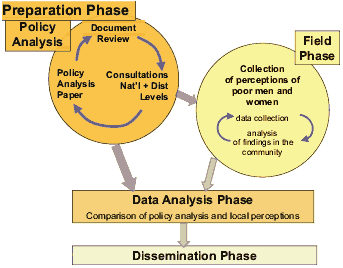
. Consultative Impact Monitoring of Policy - CoIMPact - is a participatory approach to qualitative data collection and information dissemination. It allows the voices of ordinary people in developing countries, particularly the poor, to be heard directly in the analysis and monitoring of poverty-based policies. In contrast to many existing consultative processes, these voices are heard directly and not through intermediaries. The approach has a broader focus than mere generation of data; CoIMPact emphasises issues of training and capacity building, whereby importance is given to the aspects of participation and decentralisation. The results of the qualitative survey are complementary to the results coming from quantitative surveys and statistics and offer a better understanding of the poverty situation in a country or a region. CoIMPact is a relatively new and quick approach based upon lessons-learnt from other exercises, such as Participatory Poverty Assessments (PPAs). It collects data using Participatory and Rapid Rural Appraisal methods. These are characterised by their use of visualisations and open-ended discussion. These are useful in ensuring the participation of all members of the community, particularly those who might otherwise be excluded such as women or the illiterate. At the same time, CoIMPact focuses on the process, trying to involve representatives from an array of institutions both governmental and non-governmental and ensuring that the results of the exercise find their way into the policy process. Figure 1: Main phases of CoIMPact
|